Fourth Avenue Tunnel
Park Ave & E 33rd St, New York· Located to the block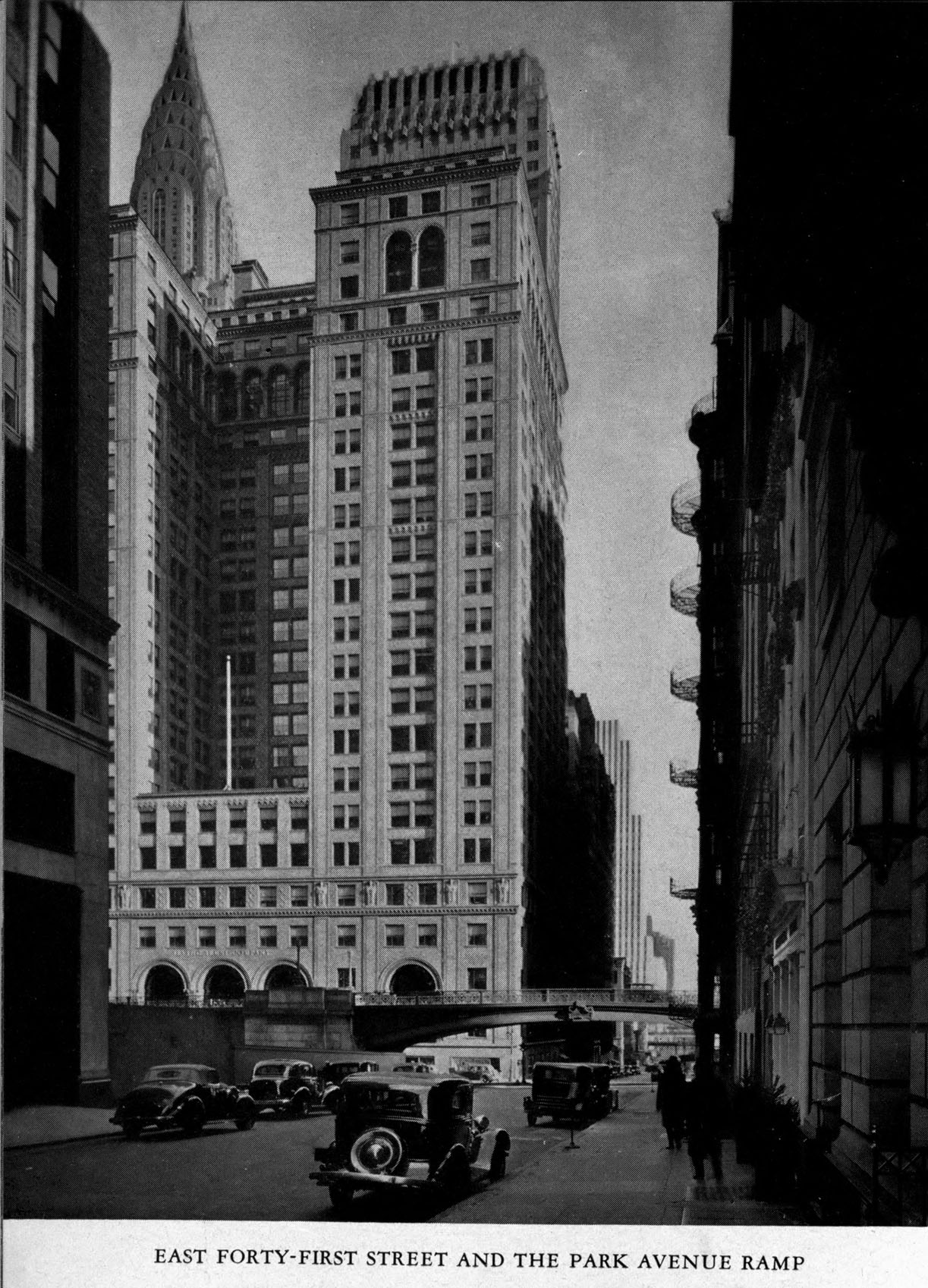 From the 1830's to the 1890's, what is now Park Avenue and its southern extension, Fourth Avenue, held the tracks of the New York and Harlem Railroad. After 1842 the use of steam-power was forbidden below Thirty-second Street, and horsecars of the New York and Harlem Railroad and later of the New York and New Haven, supplanted the downtown trains.
As early as 1833 a cut was made through Murray Hill between Thirty-second and Forty-second Streets, and in 1846 the Common Council ordered the cut to be bridged; subsequently it was converted into an arched brick tunnel. A group of young hoodlums, known as the Fourth Avenue Tunnel Gang, made their headquarters here about the time of the Civil War. Richard Croker, later Tammany chief, was said to have been one of the leaders.
In 1854 an order of the Common Council further restricted the use of steam-power, and the horsecar lines were extended to Forty-second Street. Here, in 1871, the Harlem Railroad Company opened the Grand Central Depot. Horsecars were replaced in the late 1880's by cable cars and in 1896 the Harlem road leased the lines below Forty-second Street to the Metropolitan Street Railroad Company.
Streetcars were replaced by motor busses in 1933 and the use of the old Fourth Avenue tunnel was limited to private motor vehicles. At Fortieth Street the tunnel gives access to the ramp around the new Grand Central Terminal.
Point of interest from New York City Guide (1939), shown as printed.