The Rockaways
Rockaway Beach, Queens· Approximate: located to the area, not the building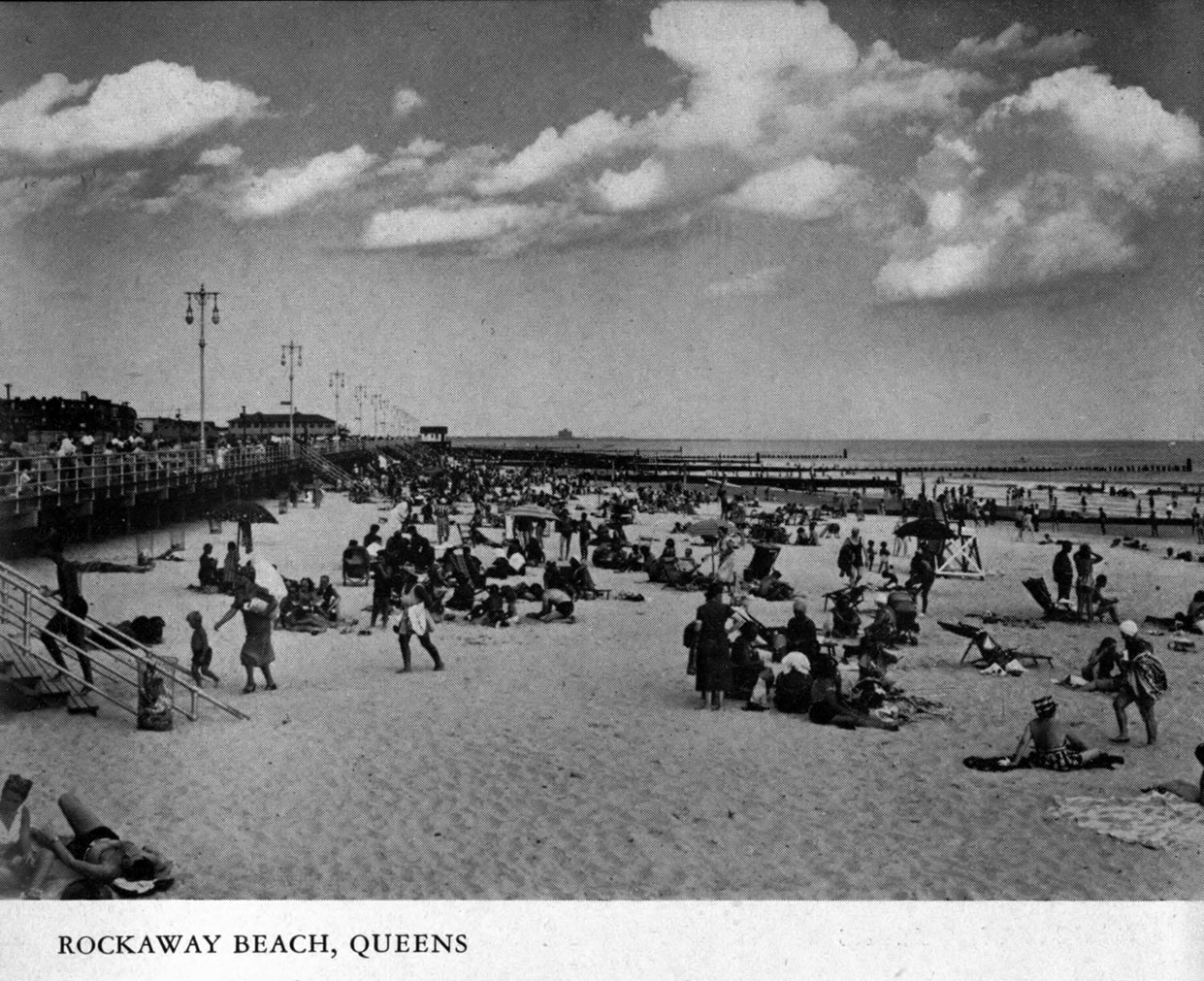
THE ROCKAWAYS, a narrow windswept peninsula, jutting from the southern mainland of Queens like a sharp splinter, takes its name from the tribe of Indians who inhabited this region. In the pre-railroad era, Far Rockaway was reached by stagecoach over a turnpike from the Brooklyn ferry landing, and its relative inaccessibility made it a fashionable resort second only to Saratoga Springs.
With the construction of railroads in 1868, 1872, and 1878, extensive building activity took place in the section. By 1900 society leaders had retreated eastward to the exclusive folds of the Hampton dunes, and the area became a resort for lower middle-class families. Neponsit, Belle Harbor, and Far Rockaway retain traces of the Rockaways' former splendor. In 1925 Rockaway was the scene of a disastrous real-estate boom, following the Florida example, in which millions of dollars were made and lost by frenzied speculators.
There are no industries on the peninsula save those which cater to the needs of the summer visitors and the 45,000 permanent residents. The principal business and shopping street is Rockaway Beach Boulevard, which runs almost the entire length of the peninsula and connects with Cross Bay Boulevard, the main highway to central Queens and Brooklyn.
In summer the Rockaways acquire the color, congestion, and gaiety of Coney Island. On weekends as many as a million people throng the fivemile long boardwalk, lie on the white beaches, and swim in the surf.
More than a hundred hotels, most of them in Arverne, Edgemere, and Far Rockaway, cater to vacationists.
Flounders, weakfish, sea bass, kingfish, fluke, porgies, and bluefish abound, and the permits obtained from the borough president's office allow fishing between 8:30 P.M. and 8:00 A.M. from March to late September. In 1935 Francis Low caught a tuna off the Rockaways weighing 735 pounds, establishing a national record.
In winter the ocean-bound strip is a quiet suburb. The beach is deserted, save for flocks of gulls that wheel in the air, and nearly all the bungalows, shops, hotels, and bathhouses along the boardwalk are closed, like theaters out of season.
Point of interest from New York City Guide (1939), shown as printed.