University Heights Center of New York University
University Ave & W 181st St, Bronx· Located to the block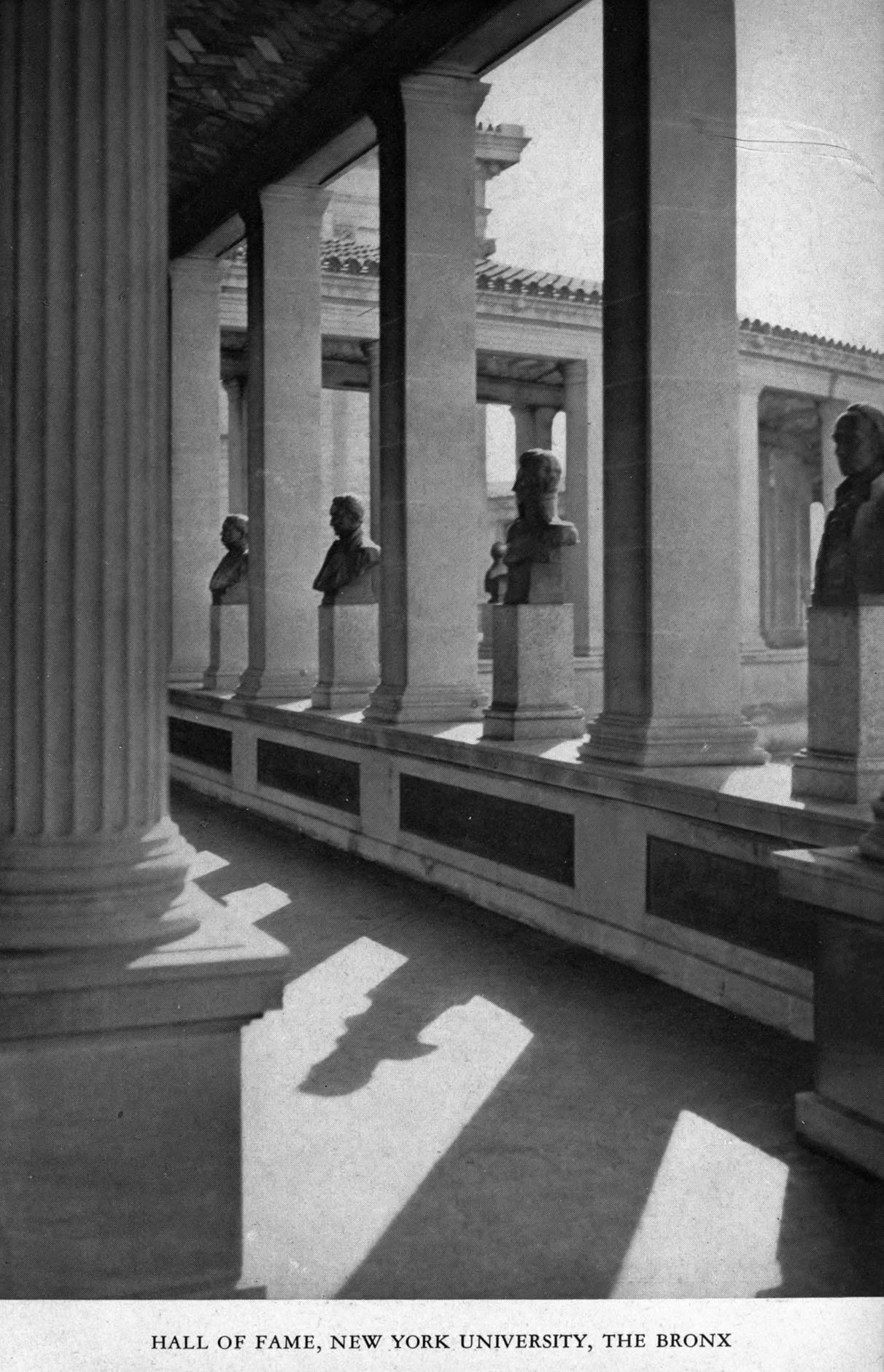 UNIVERSITY HEIGHTS CENTER OF NEW YORK UNIVERSITY, 181st Street and University Avenue, overlooking the gorge of the Harlem River, has some of the charm of a small-town college campus.
The Heights Center of New York University (see page 133) consists of the undergraduate College of Arts and Pure Science and the graduate divisions of the College of Engineering, enrolling altogether about two thousand men. Its eighteen buildings include several old mansions and stables acquired from previous estates and altered to fit educational purposes.
All the modern structures except the gymnasium were designed by Stanford White; they are alike in material and treatment light yellow brick with gray stone trim. The otherwise plain buildings are enriched by a simple use of classic forms that brings the architecture close in spirit to the Federal period. The group has been justly criticized because the interior of the campus, like that of Columbia University, lacks a view of the river.
The university's Hall of Fame, topping a high cliff at the western edge of the campus, makes a striking landmark that is best viewed from the other side of the river. A 520-foot, semicircular colonnade of granite, the hall has become a national memorial of which the university considers itself the trustee.
Along its walls are 150 panels, all destined to be filled with inscriptions celebrating the achievements of outstanding Americans. Candidates for this honor are nominated by the public and chosen by a college of electors consisting of well-known people, and are approved by the Senate of New York University. Above the panels stand bronze busts of the elected persons, the work of eminent artists.
Celebrations are sometimes held before the memorials of the individuals on their anniversary days. Among New Yorkers already included in the Hall of Fame are the authors, Walt Whitman, Washington Irving, William Cullen Bryant; the inventors, Samuel F. B. Morse, Robert Fulton, W. T. G. Morton; the philanthropist, Peter Cooper, and the Abolitionist minister, Henry Ward Beecher. The hall itself was the gift of Mrs. Finley ]. Shepard (Helen Gould), who also donated the library and Gould Hall to the university. It was dedicated in 1901, when the first twenty-nine figures were unveiled. Seventy-two of the niches are now filled.
The University Heights campus has expanded to an area of about fifty acres since the first eighteen acres were acquired in 1891. Here, during the Revolution, stood British Fort Number 8 which defied assault until the end of the war. Between Butler and South Halls a boulder, a number of guns, and the white mast of the America's Cup challenger, Shamrock IV, presented by Sir Thomas Lipton, mark the spot from which the English on November 16, 1776, launched their successful attack on Fort Washington across the river, and forced evacuation of Laurel Hill.
Point of interest from New York City Guide (1939), shown as printed.