Columbus Circle
Columbus Cir, New York· Approximate: located to the area, not the building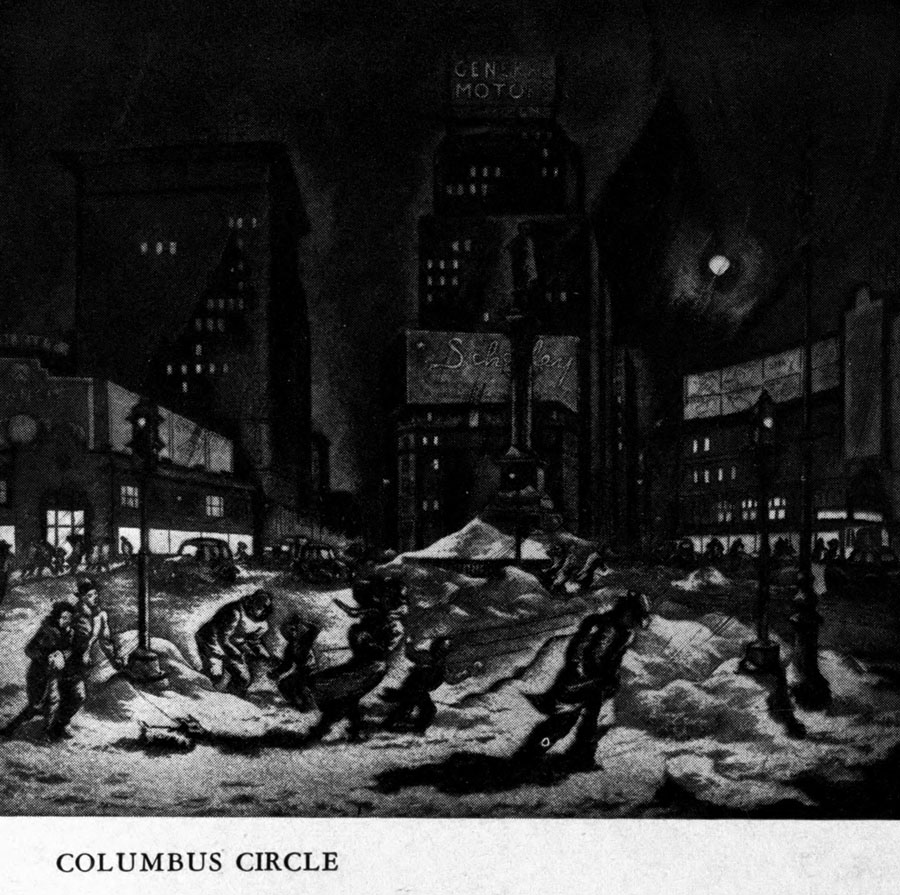
At the center of the Circle is a seventy-seven foot granite column supporting a marble STATUE OF COLUMBUS, completed by Gaetano Russo in 1894. Three bronze ships' prows, representing the ships in Columbus' fleet, ornament the shaft, and before the pedestal is the figure of a winged youth, studying a terrestrial globe. Until the United States entered the World War, Times Square was the scene of many outdoor forums.
When the square became too crowded these activities shifted northward; now in the open space below the monument impromptu discussions are held and groups listen to oratory on every conceivable subject from Thomas Paine and the Age of Reason to the advantages of a vegetable diet. At night advertising signs on the near-by buildings light the scene.
Columbus Circle gives an impression of monuments and space, the expanse of Central Park (see page 350) spreading north and east beyond the Merchant's Gate, with towering apartment hotels on Central Park West, and Broadway--the old Bloomingdale Road--stretching north.
Boomed for a time as an outpost of Times Square, the Circle gradually took on a somewhat abandoned appearance. The western arc of the Circle is dominated by a huge old-fashioned theater, originally the Majestic, now called the Park and showing motion pictures. Beside this theater stood Pabst's Grand Circle, a prewar restaurant famed for its free lunch, orchestra, and oyster bar.
Point of interest from New York City Guide (1939), shown as printed.